

Services · Storefronts that sell

Storefronts that sell, not just display.

An online store is a machine with one job: turn a browser into a paid order. We build the whole machine — catalogue, checkout, payments and the admin your team runs it from.

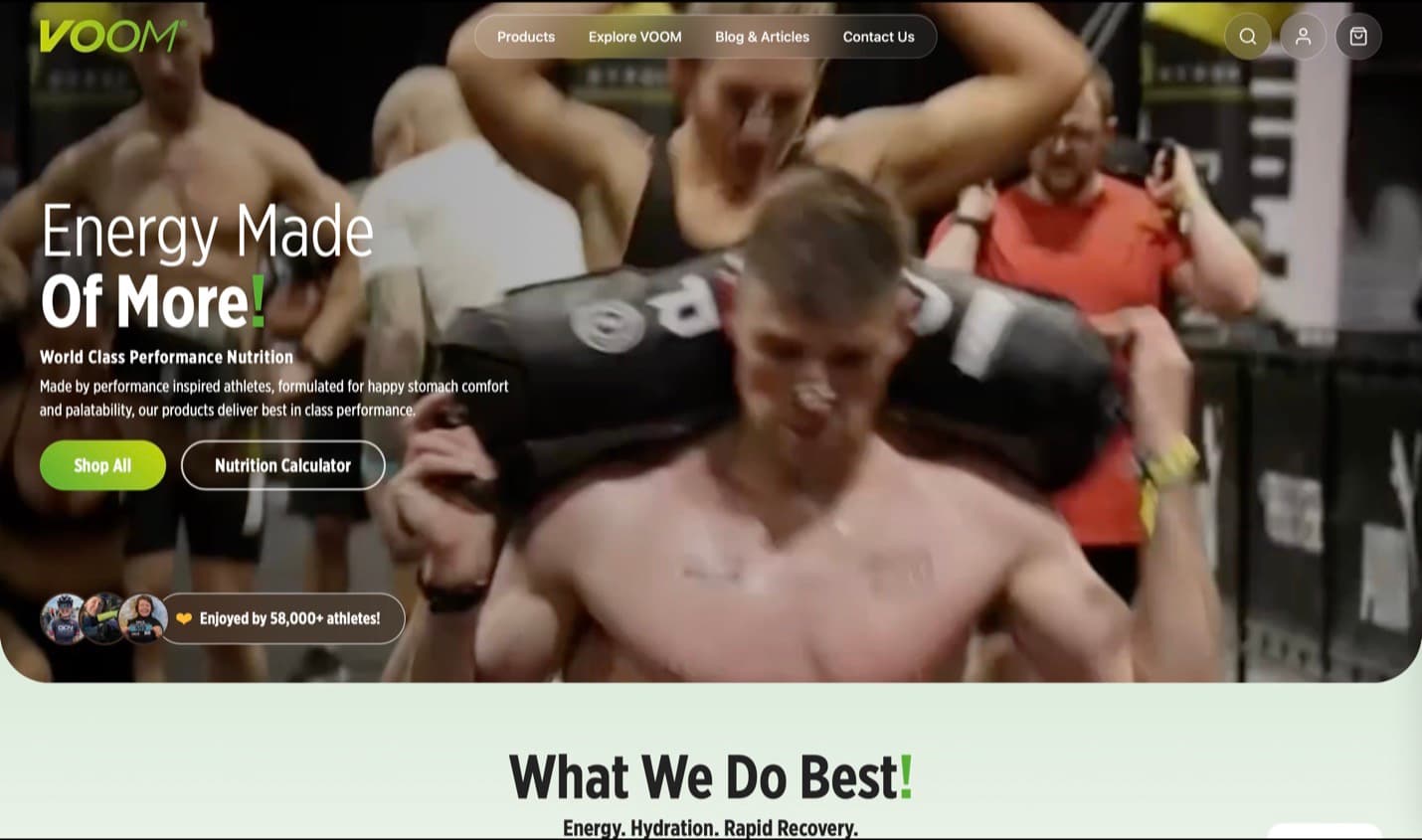
Voom storefront, built by Vebses
Voom
7
storefronts live
EUR / GEL
switching, built and tested
4–12 wks
Shopify through custom
The reframe

Every problem below has a line opposite it.

Your site today

Carts fill and empty.

Checkout asks too much, loads too slowly, or hides delivery cost until the last step.

The shortest checkout that works.

Guest checkout by default, delivery and address in one view, Georgian gateways tested with real cards.

The catalogue is unbrowsable.

Hundreds of products, no filters worth using, search that returns nothing.

Filters that survive the range.

Attributes modelled properly, so filtering stays instant at a hundred products and at ten thousand.

Stock lives in two places.

The site says one thing, the warehouse says another, and someone reconciles it by hand.

One source of truth.

Stock, prices and orders synced with the system you already run, instead of retyped.

You are selling in DMs.

Orders arrive through Instagram because the store never made buying easier than asking.

Buying beats asking.

Product pages that answer the objection before it becomes a message, with the price in the currency they think in.

Shopify when speed to market wins; custom when the catalogue or logic is unusual — we will say which, and why.

Migrations keep your URLs, so the SEO you already earned survives the move.

Fixed scope, fixed price, agreed after we have seen your product data.

In practice

Four things that decide it.

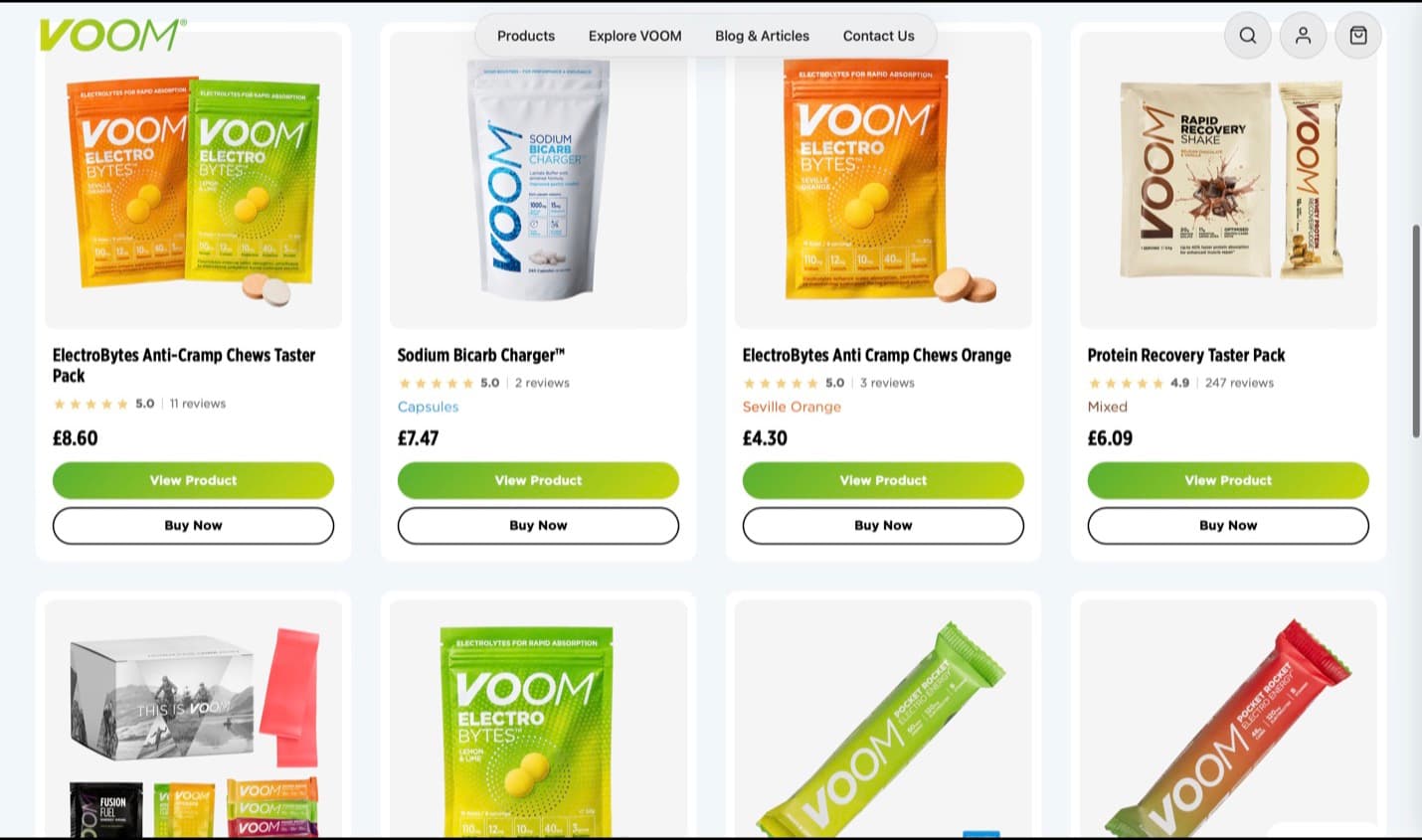
Voom product grid with prices, review scores and buy actionsEnough to decide
01

Whatever decides the order belongs on the page, not in an email reply.

Ask whoever replies to customers which questions come up before people buy — size, compatibility, what is actually in the box — then put those answers where the decision happens, written the same way on every line.

Fewer questions before the order, fewer surprises after it.

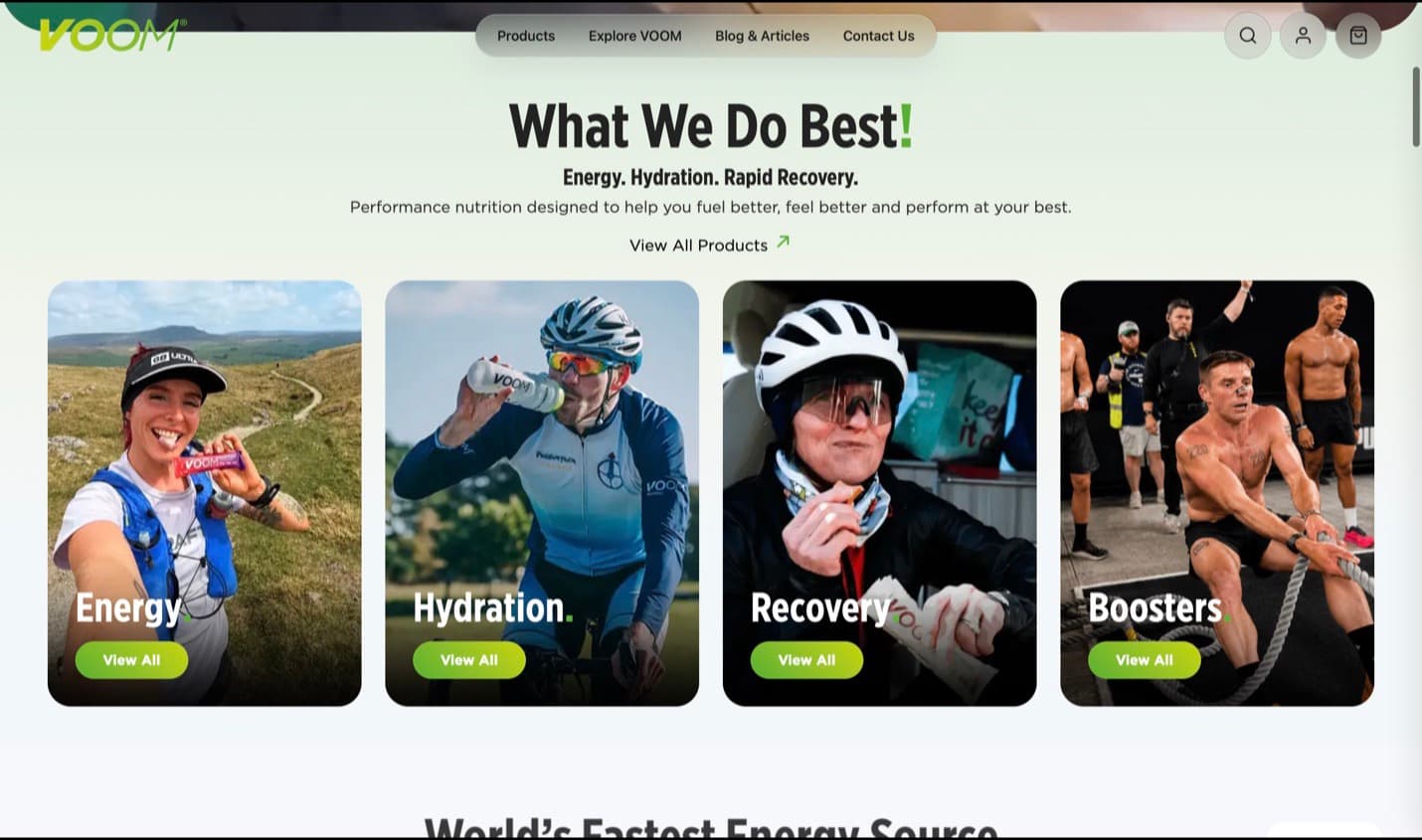
Voom category entry points for energy, hydration, recovery and boostersThe whole price
02

Delivery cost and delivery date belong beside the price, not after it.

Especially the answers you would rather not lead with — an eight-week lead time, a minimum order value, a freight cost that has to be quoted. Said early they cost a question; said late they cost the order.

The awkward number costs less when it arrives early.

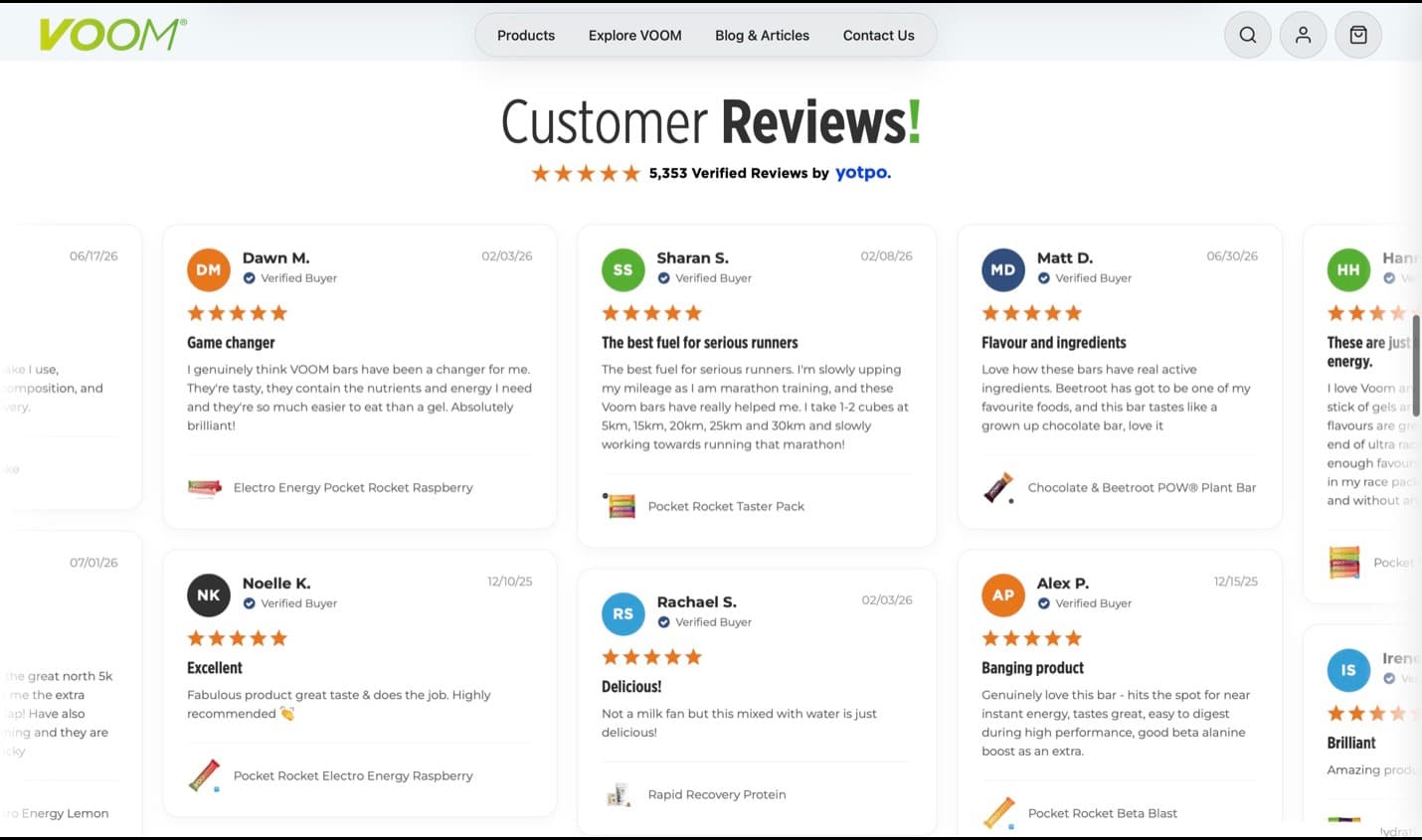
Voom customer reviews section with verified buyer ratingsNumbers that agree
03

The shop should never tell a customer something your own records would deny.

Stock, prices, customer terms and what has shipped live in more than one system. We connect the shop to them where we can, and show the gap where we cannot. The business absorbs a disagreement, never the customer.

Nobody spends Friday reconciling the site against the ledger.

Transporter's international partner brands as a browsable catalogueTwo years in
04

A shop is edited for far longer than it is built.

The real test comes later. Whoever inherits it should be able to retire a line or replace a photograph without raising a ticket, on handover day and two years after.

A shop still accurate two years after launch.

Spec sheet

What ships, in numbers.

First website? This is the standard every build is measured against before we hand it over — the same one whether the job is a landing page or a platform.

90+

Lighthouse, mobile

The target every build ships against, verified before launch — not a promise you have to take on trust.

Performance
Sub-second first loadLighthouse 90+ on mobile, checked before launch
Design fidelity
Pixel-exact, every breakpointPhone, tablet, laptop, wide — not approximately
Motion
60fps, GPU-compositedNo jank, no layout shift, reduced-motion respected
Accessibility
WCAG AA contrastFull keyboard path and screen-reader labels
Browsers
Last two versionsSafari, Chrome, Firefox, Edge — plus real iOS devices
Languages
GE / EN / RULocalised routes and metadata, not a translate widget
Search
Schema, sitemap, metadataStructured so answer engines can quote you
Ownership
Yours on day oneCode, CMS and domain in your accounts, not ours
How it works

Eight steps, no surprises.

The full process
  1. 01

    Intro call

    Thirty minutes. A straight answer and a budget range.

  2. 02

    Discovery

    We map the problem and write the scope.

  3. 03

    Design & build

    Weekly demos, a staging link from week one.

  4. 04

    Launch & after

    Live, tracked, and still ours to look after.

Shipped with
FAQ

Asked and answered.

Still unclear? The intro call costs thirty minutes and commits you to nothing.

Shopify wins when you sell a normal catalogue and want to be live fast with payments and logistics solved. Custom wins when your pricing, stock logic or catalogue structure does not fit a template — configurable products, dual currency, or an unusual back-office sync. We recommend one after seeing your product data, not before.

We integrate the Georgian bank gateways your business already uses, alongside international processors when you sell abroad. Every provider is tested with real transactions before launch, not just in sandbox.

Yes. We built exactly this for CFMOTO, where every price on the platform switches between EUR and GEL in one tap — on the catalogue, on model pages, everywhere a number appears.

Yes, and the priority is keeping the search rankings you already have. That means preserving URL structure where possible and redirecting properly where it is not, then verifying nothing dropped after the switch.

That is usually the point. We connect the store to whatever holds the truth — your ERP, warehouse sheet or POS — so stock and prices update in one place instead of being retyped in two.

A straightforward Shopify build runs four to six weeks. A custom storefront with catalogue logic and back-office sync is usually eight to twelve, and the product data is what decides it — clean data is fast, messy data is not.

We handle structure, templates and the content model, and our content manager can write and edit descriptions. Photography we coordinate rather than shoot, so the images match the standard the storefront needs.

Analytics wired down to add-to-cart and completed order, so you can see where shoppers stop rather than guessing. We use that to tune the store after launch, which is where most of the easy revenue is.

Start a project

Tell us what you are building.

Thirty minutes, no pitch deck. Describe the problem and we will tell you what it takes to solve it — scope, budget range, timeline — even if the answer is that you do not need us.

Phone (optional)
What are you building?

We reply within 24 hours.