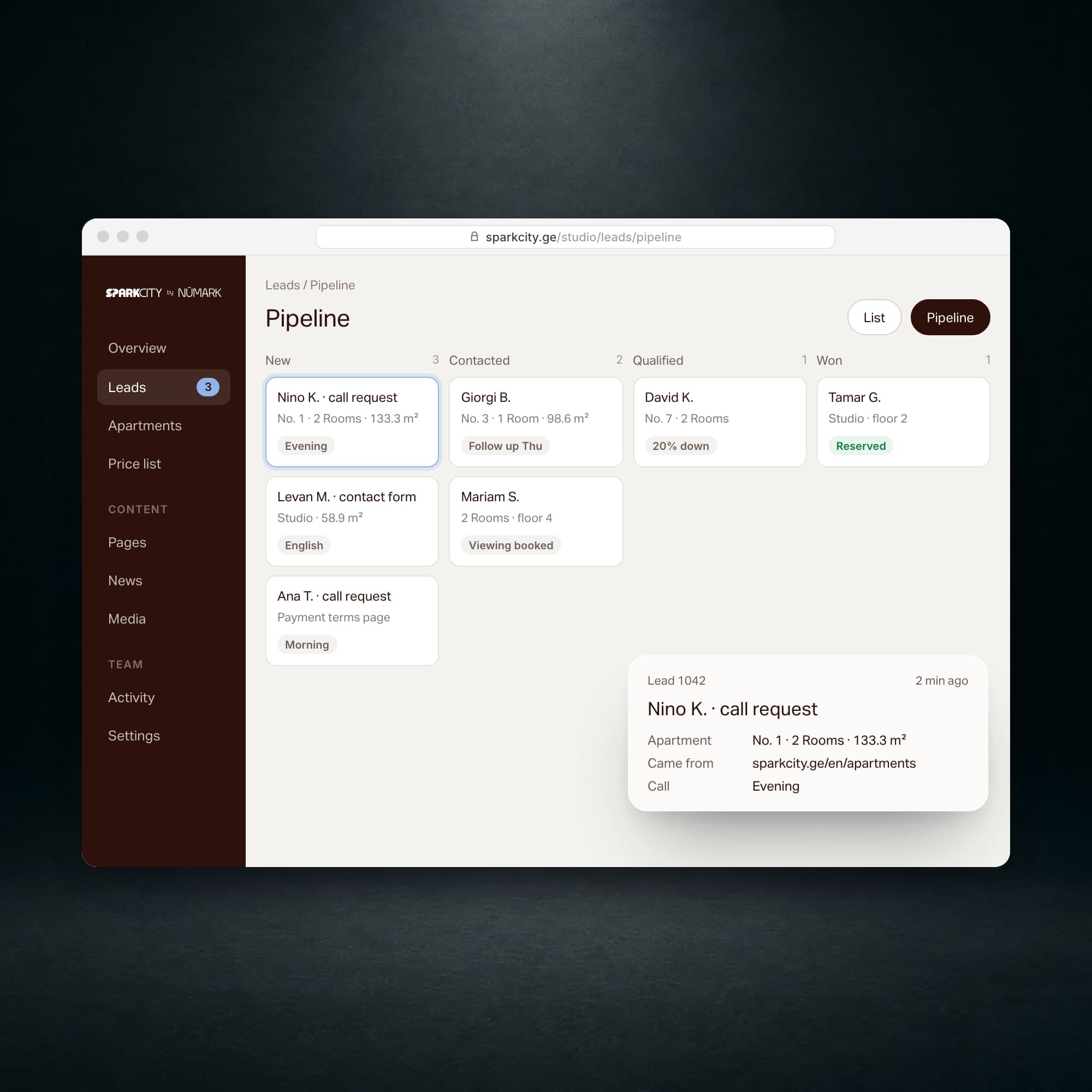


Materia
Development showcase for the Outlook Forest project
Full case studyUI/UXDevelopment

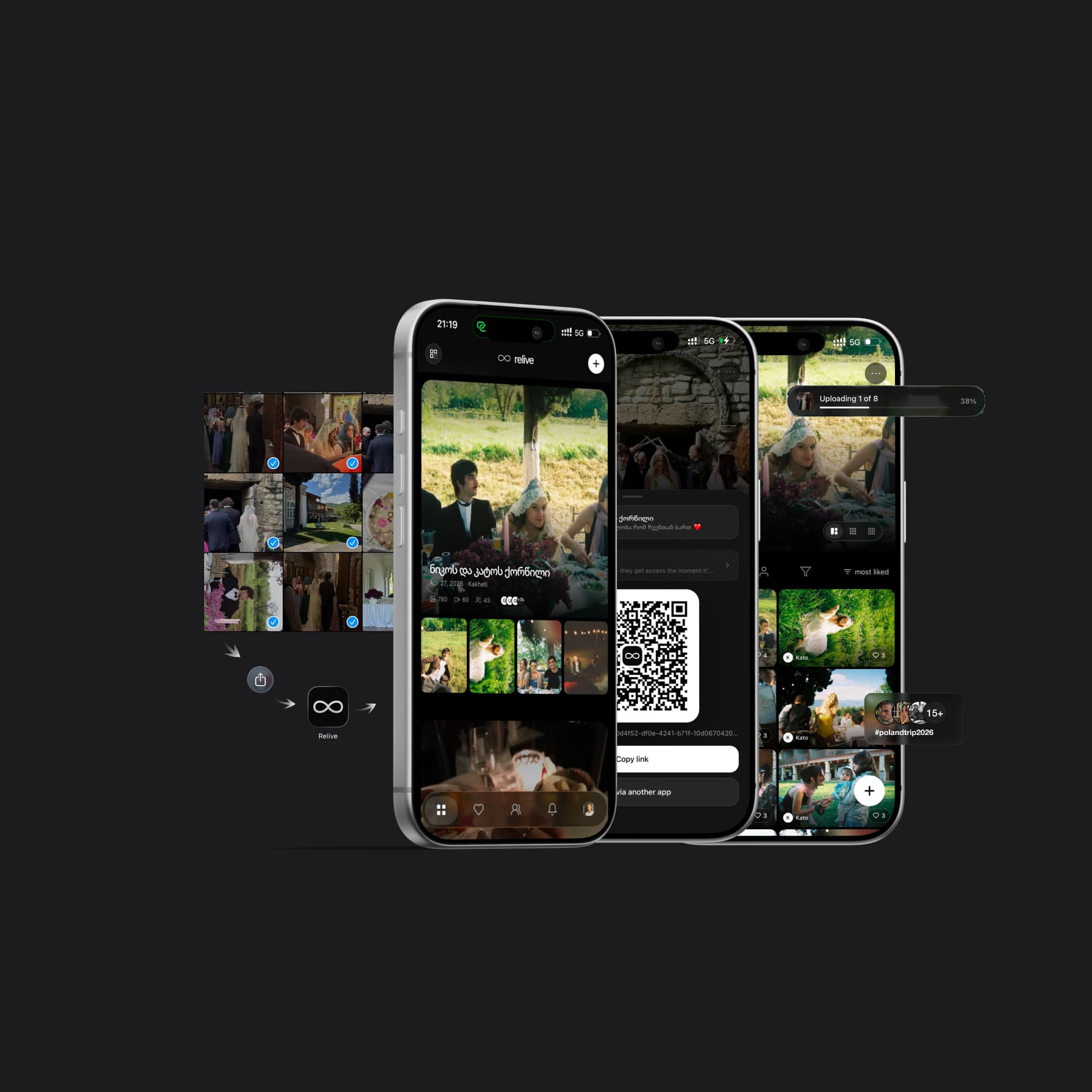
One shared camera roll for a wedding, a trip or a party. Guests scan a QR code, and every photo and video lands in the same live feed.
Visit relive.geFor Relive, our own event photo-sharing platform, we designed and built the landing at relive.ge, the web app and everything the iOS and Android apps talk to. A host creates a memory and shares one QR code or link, and every guest's photos and videos flow into one live shared feed, with no app for guests to install. The site explains it in five steps, in English and Georgian, and the pricing is free for up to three people, then one flat fee per memory.
Guests scan the host's QR code or open the link, and their photos and videos land in the same feed as everyone else's.
Everything works in the browser, and a guest can add photos with just a phone number. The apps are for hosts on the go.
Only people with the link or the QR can see a memory, and the host decides who can add photos and who can view them.
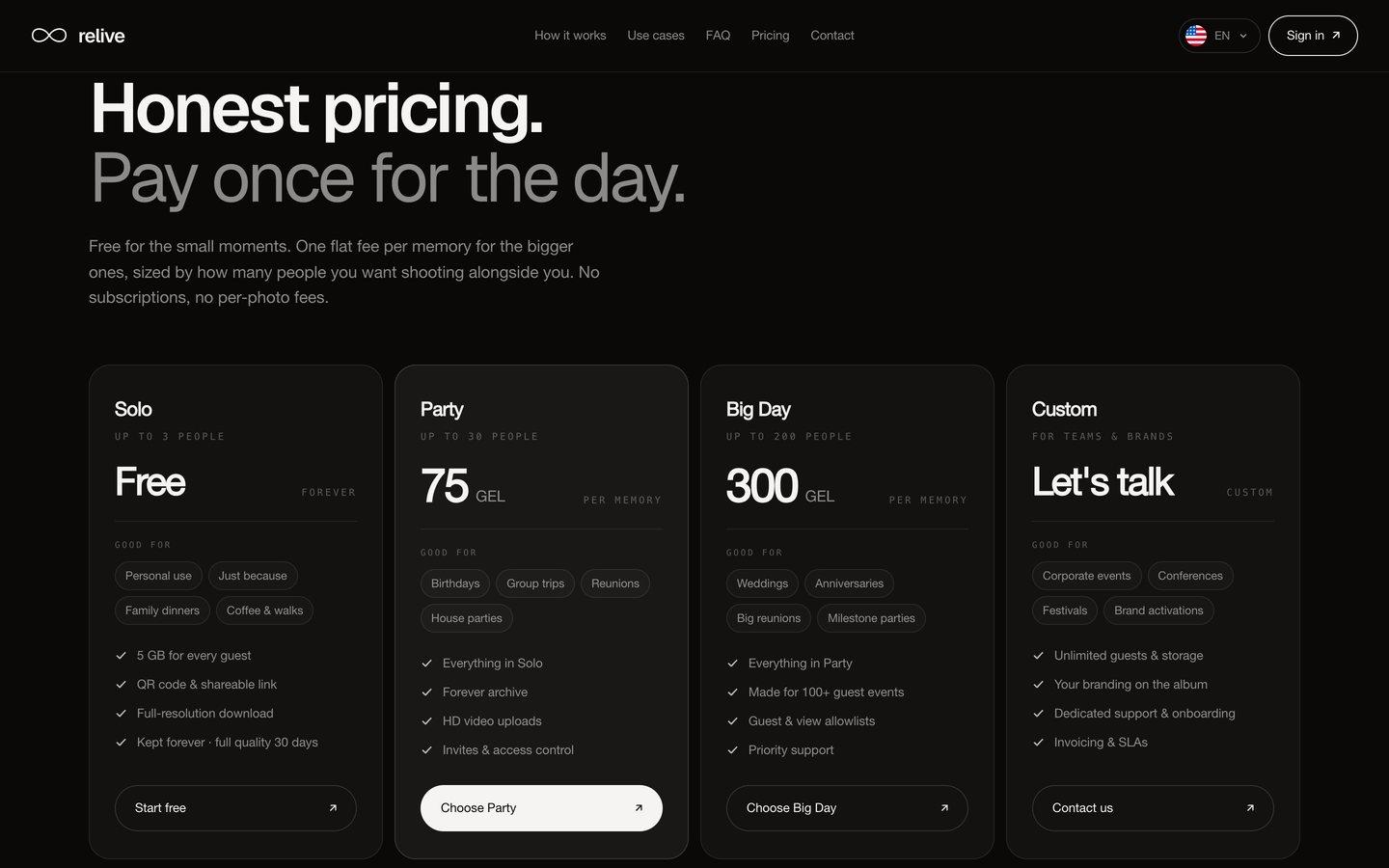
Solo is free for up to 3 people, Party is 75 lari for up to 30 and Big Day 300 lari for up to 200. No subscriptions.
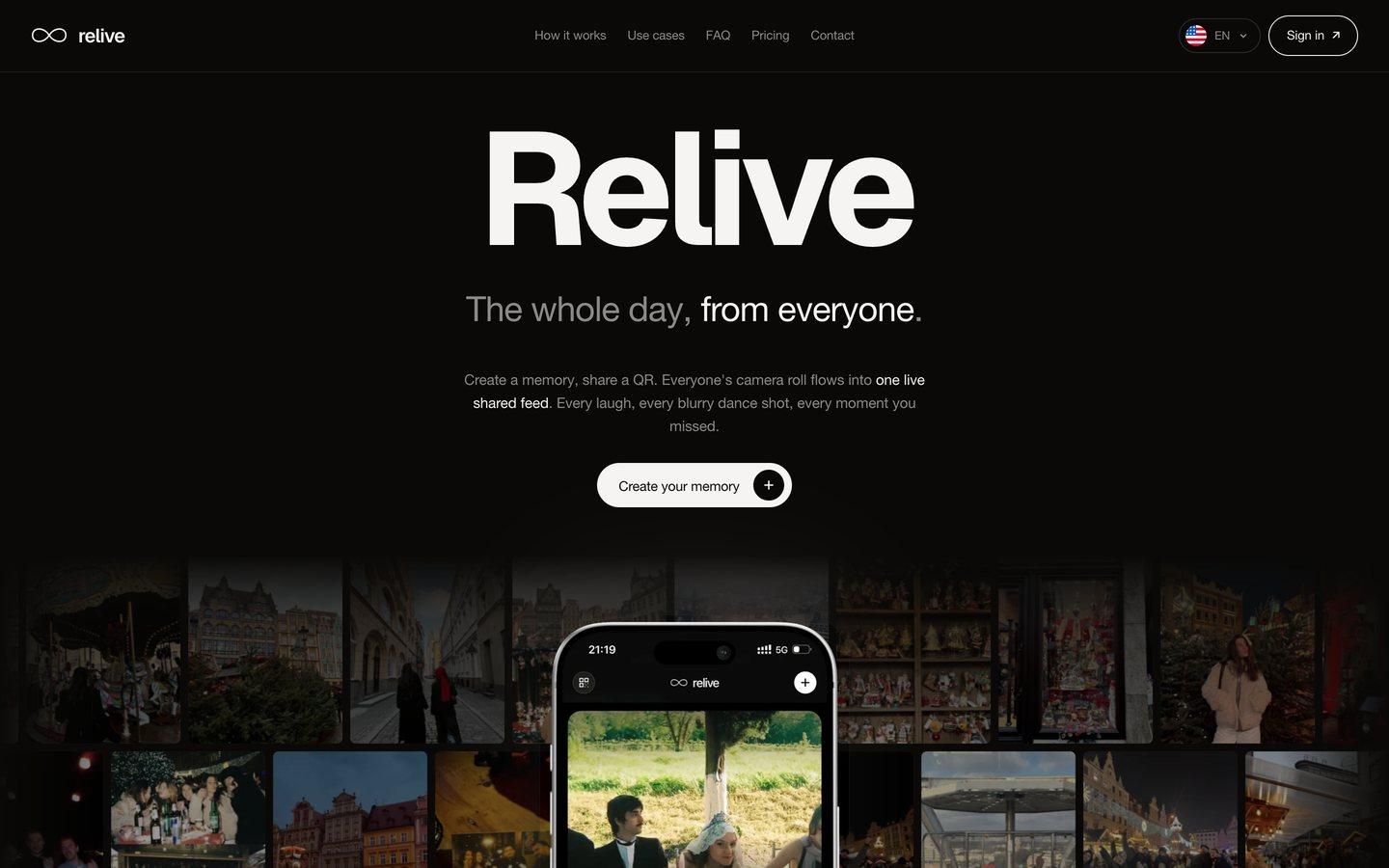
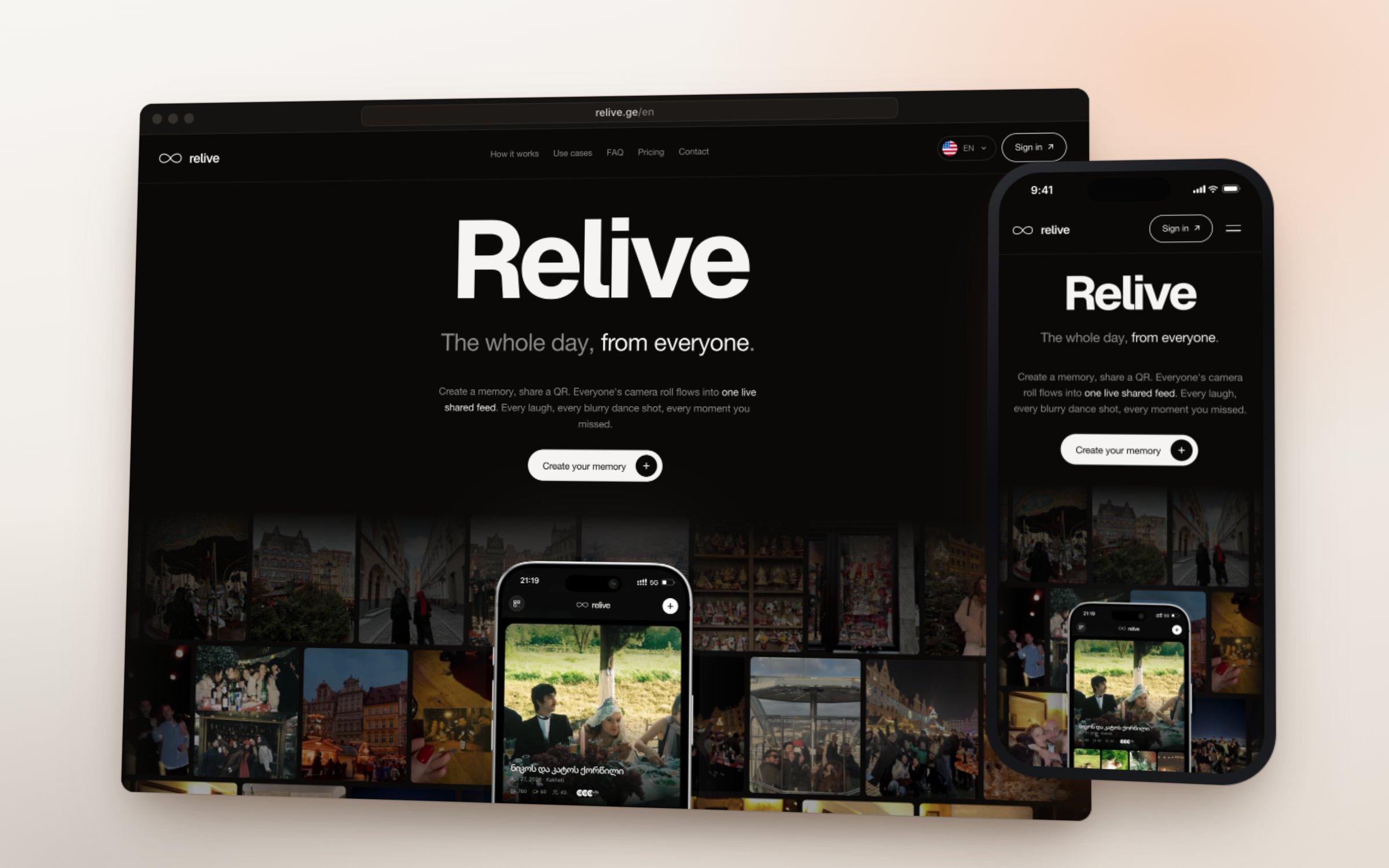
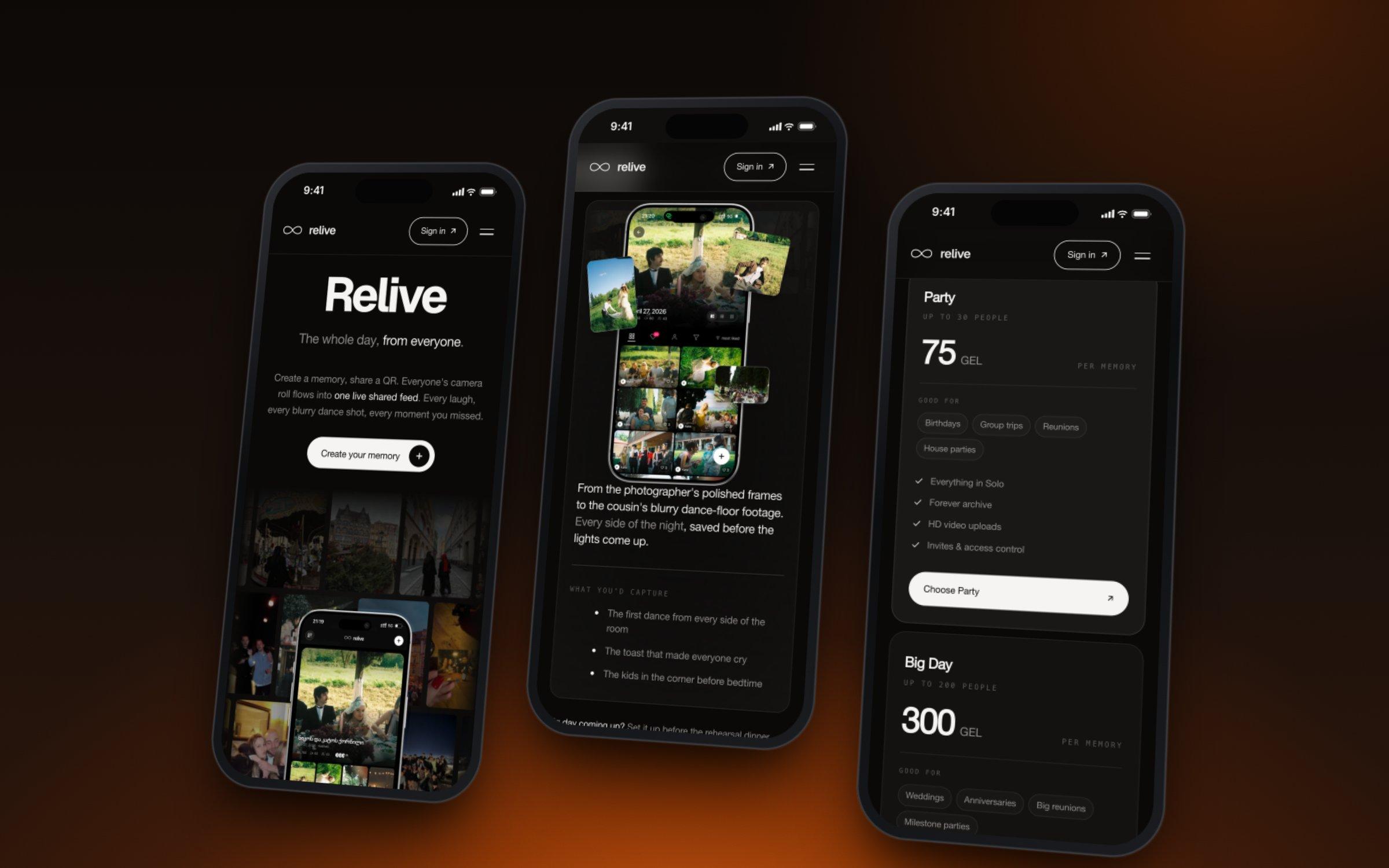
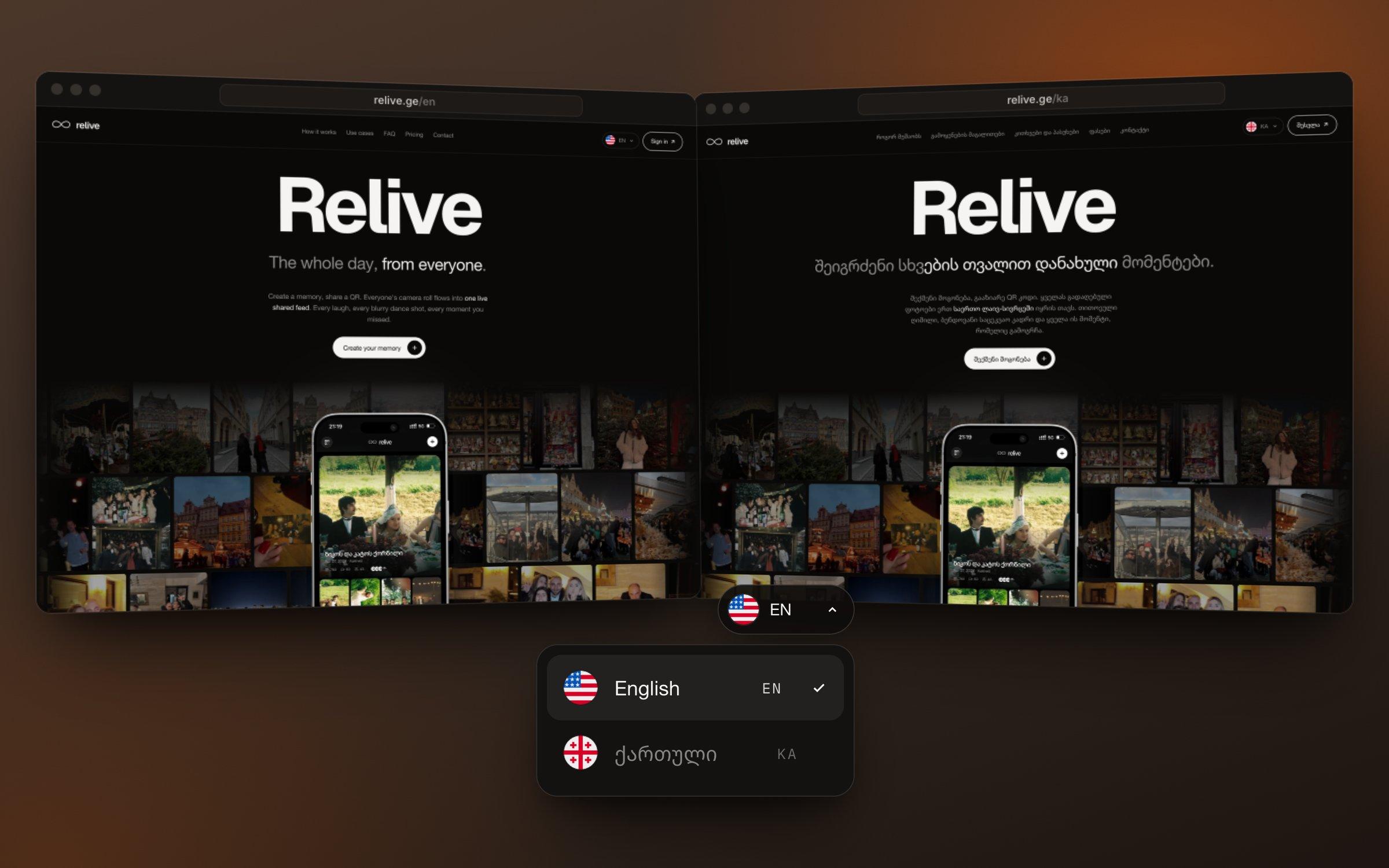
A large Relive wordmark, one of five rotating taglines and one button, Create your memory, above a wall of photos with the app on a phone.
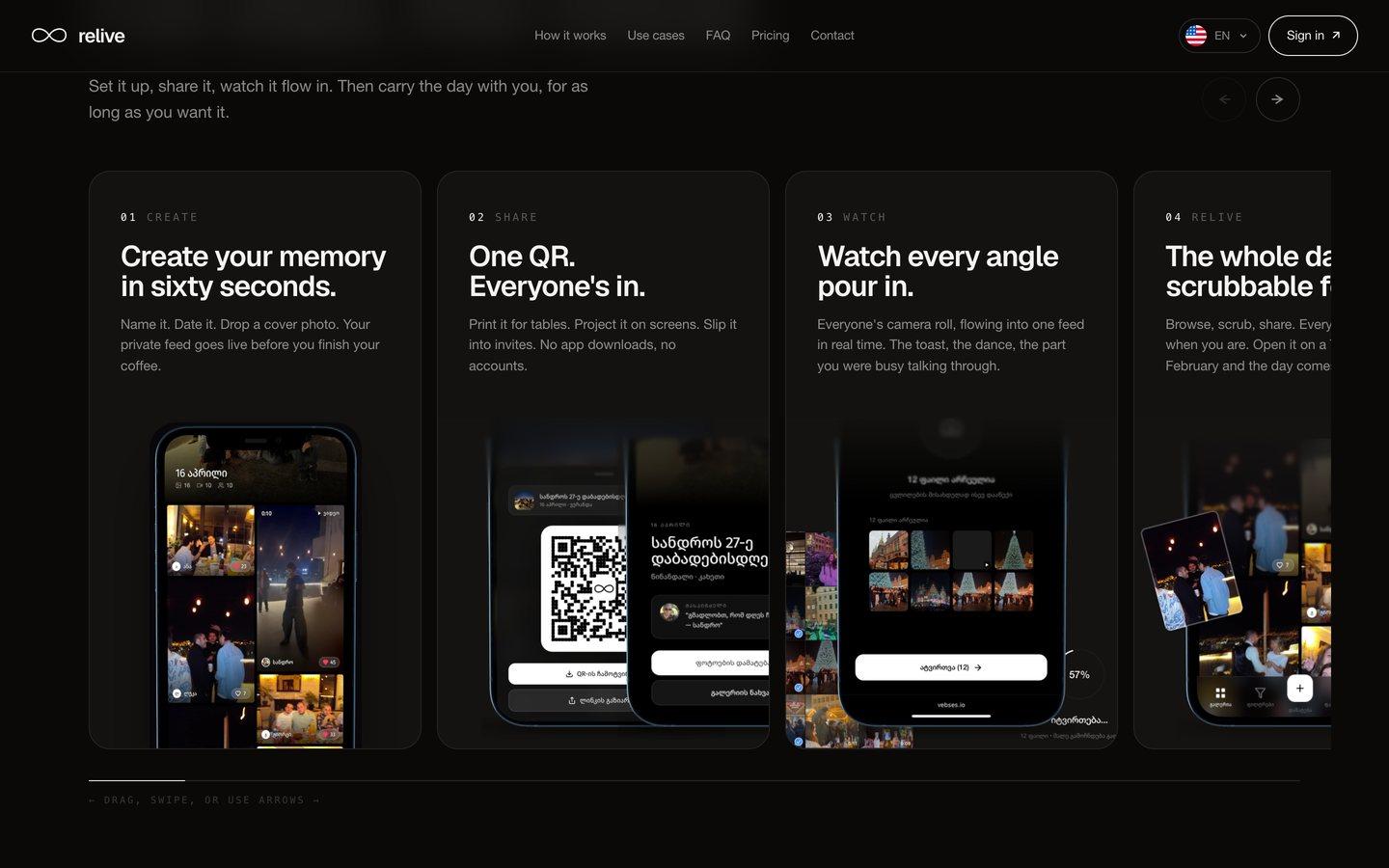
Five steps, from creating the memory and sharing one QR to watching the feed fill up, told with real app screens.
Free for up to 3 people, 75 lari for up to 30, 300 lari for up to 200, or a custom plan for teams and brands.
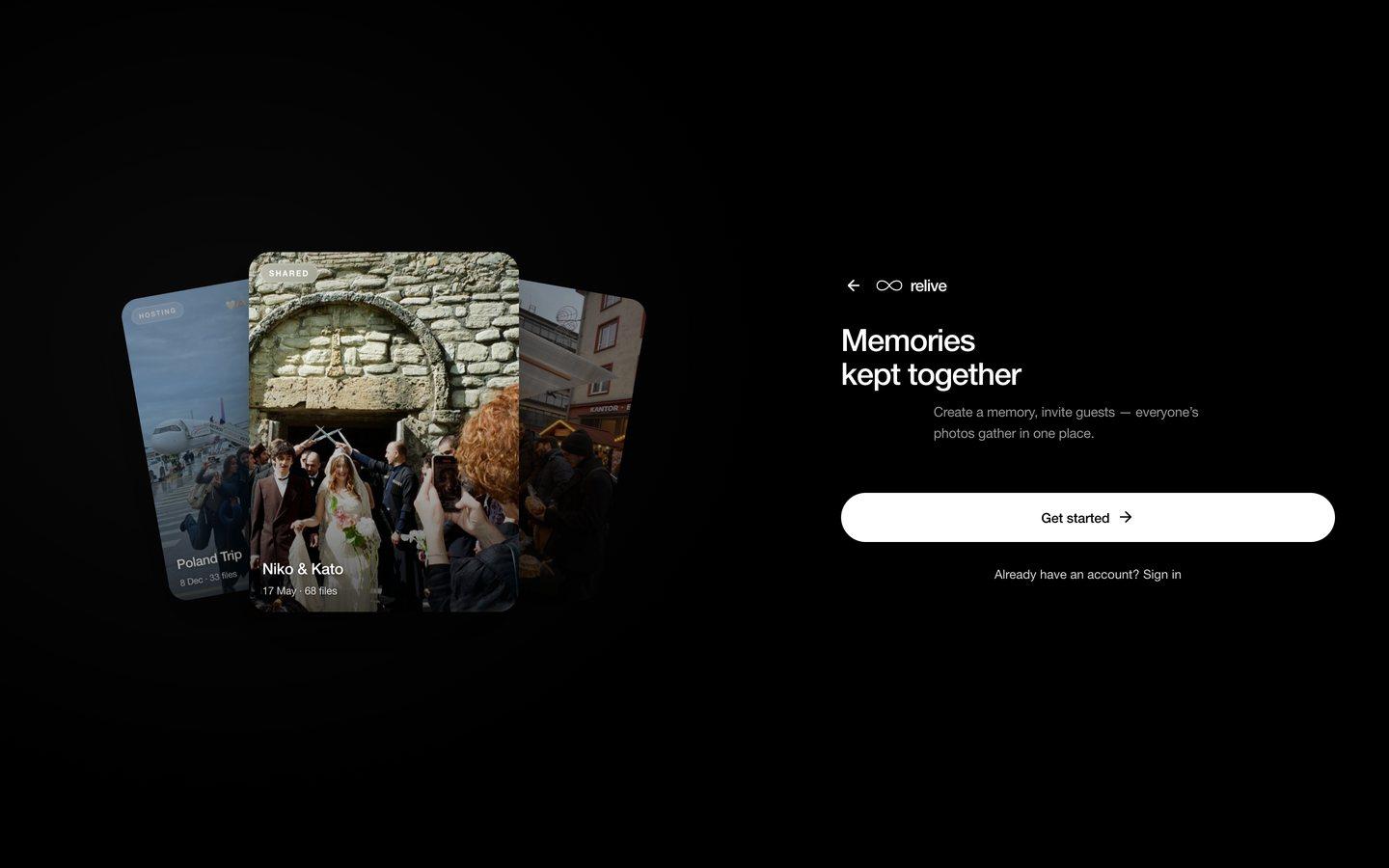
Create your memory opens the web app, with sample memories and a Get started button. Signing in takes a phone number or a username.

Create, share, watch, relive, repeat: the How it works carousel moves card by card, and the cards carry real screens from the Relive app.
Recorded on the live site

Uploads can be open, limited to invited numbers or by request, and viewing open, limited to those who uploaded or to invited numbers. Only the host sees a guest's phone number.

On a phone, Create your memory opens the web app. Sign-in takes a phone number or a username, with Georgia's +995 preselected and a country list that narrows as you type.
Recorded on the live site

Photos in JPEG, PNG, WebP, HEIC or HEIF, and videos in MP4 or MOV up to 10 minutes, up to 100 files in one session. Every guest gets 5 GB, and files stay at full quality for 30 days.

Weddings, trips, birthdays, special days or just because: each tab swaps the phone screen, the photos, what you'd capture and the button that starts it.
Recorded on the live site

Party, the plan for birthdays, group trips and reunions, is 75 lari per memory for up to 30 people; Big Day is 300 lari for up to 200, and Solo is free. Payment is one-time, with no subscription.
At every wedding, trip or party the best photos end up scattered across a hundred phones. Relive is the product we built to fix that: a host creates a memory, shares a QR code or a link, and everyone's photos and videos flow into one live feed.
It had to be simple for guests (no app required, just a phone number) and solid behind the scenes: uploads from many phones at once, payments in lari, and moderation for the host.
We designed and built the platform on Next.js: the landing, the web app, the tools our own team runs it with, and everything the iOS and Android apps talk to.
Guests join with just a phone number. Photos and videos upload straight from the phone, play on any device, and a whole memory downloads in one go. Hosts get members, moderation and analytics for each memory, and pay by card, Apple Pay, Google Pay, bank transfer or through the app stores.
The landing's copy and images are edited without a developer, in English and Georgian.
Read from the live site: the build, and the services a visitor meets on its pages.
Planning something similar? The intro call is thirty minutes and commits you to nothing.
A host creates a memory with a name, a date and a cover photo, which takes about a minute, then shares its QR code or link. Guests scan it or tap it, pick photos and videos from their camera roll, and everything lands in one live feed. The host can change any detail later, even after the event has started.
No. Everything works in the browser, and a guest can add photos with just a phone number, without creating an account. The iOS and Android apps are for hosts who want to manage their memories on the go.
Memories are private by default: only people with the link or the QR code can see them, and the host can add a passcode or an end date. Access modes set who can add photos (open, invited numbers or by request) and who can view (open, uploaders only or invited numbers). Hosts can hide any photo with a tap, and only the host sees a guest's phone number.
Solo is free for up to 3 people. Party is 75 lari per memory for up to 30 and Big Day 300 lari for up to 200, each paid once, with no subscription. Corporate events, conferences and festivals get a custom plan. Hosts pay by card.
Photos in JPEG, PNG, WebP, HEIC or HEIF and videos in MP4 or MOV up to 10 minutes, up to 100 files per session; HEIC photos are converted to JPEG. Full-resolution originals can be downloaded for 30 days, one by one or as a single ZIP, and after that a high-quality compressed copy is kept. Solo, Party and Big Day each include 5 GB per guest.
English and Georgian. Visitors land on the English or the Georgian site depending on their browser's language, and the landing, the web app and the help centre exist in both. The landing's copy and images are edited without a developer, in both languages.
Vebses, a web studio in Tbilisi. Relive is our own product: we designed it and built it on Next.js, from the landing and the web app to the tools our team runs it with and everything the iOS and Android apps talk to.
Yes. Relive is our own product site and web app, built end to end, and its groundwork would carry over to yours: a landing that explains the product in a few steps, a web app that runs in the phone's browser, sign-in by phone number, pages in Georgian and English, and copy edited without a developer. The scope would start from your own flow.
Thirty minutes, no pitch deck. Describe the problem and we will tell you what it takes to solve it (scope, budget range, timeline), even if the answer is that you do not need us.